Wednesday, 19 October 2011

Genres of photgraphy And Photographers

Famous photographers
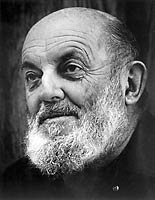
Ansel Adams, who focused on nature photography, is known for his black-and-white photographs highlighting nature, particularly those of the Yosemite Valley in California. He devised the ‘zone system’, a technique of focusing light on negatives to regulate the appearance of finished pictures. His ‘theory of visualization’ explains the act of measuring the light in a scene to visualize the finished photograph. He remained a passionate environmentalist, dedicated to capture images of pristine terrain.


Hiroh Kikai, a Japanese photographer, is known for his portraitures in Tokyo’s Asakusa region. Pilippe Halsman was among the leading portrait photographers and is known for his sharp and dark images. During his flourishing career, he captured celebrities like Winston Churchill, Marilyn Monroe and Pablo Picasso. Nagasaki-born Ueno Hikoma was known for portraiture and landscape photography, whereby he photographed the Crown Prince of Russia in 1891. Talbert Abrams and William Garnett are renowned aerial photographers.
The concepts and principles expressed in the photographs of famous photographers are applied even today, and they enable us to discover distinct ways of viewing with a photographic eye, and utilize the art to the best extent.

Pinhole Camera's

Pinhole camera's
A pinhole camera is a simple camera without a lens  and with a single small aperture – effectively a light-proof box with a small hole in one side. Light from a scene passes through this single point and projects an inverted image on the opposite side of the box. The human eye in bright light acts similarly, as do cameras using small apertures.
Because a pinhole camera requires a lengthy exposure, its shutter may be manually operated, as with a flap of light-proof material to cover and uncover the pinhole. Typical exposures range from 5 seconds to several hours.
The f-number of the camera may be calculated by dividing the distance from the pinhole to the imaging plane (the focal lengh) by the diameter of the pinhole.


f-stop = Distance from Pinhole to Paper (mm)
    Diameter of Pinhole (mm)
Example: Pringle Tins
f-stop =  72              f-stop = f-90  
    0.8
 
We then use the combination of f-stop (f-90), film speed (6 ASA) to calculate the shutter speed (exposure time in seconds/minutes)

Pinhole camera photos


I like this photo as it contains alot of detail i let it expose for about 30 seconds the longer i left it the more detail i got. i could'nt leave it for any longer as it was really bright outside. But if i was to take a picture inside i could of left it a whole lot longer for around 2 minutes as it's a lot darker inside and takes long to process


 I took this photo on the 3rd floor in the college Atrium this is too dark i slightly tilted it by accident.I left this photo for around 2 minutes long. I left it for a longer time because the lighing inside is alot darker. it's too dark to see any detail


 This photo i took was outside the college entrance there is alot of detail in this photo. there is abit if brightness on the bottom left corner on the photo which spoils the photo really


 This photo was taken inside of the Atrium i left it for too long which makes it too dark. I was on the 3rd floor the only real detail is of the room lighting and the main college lights.